
Admin User
 AI in Education
 0 comment
 25 May, 2026
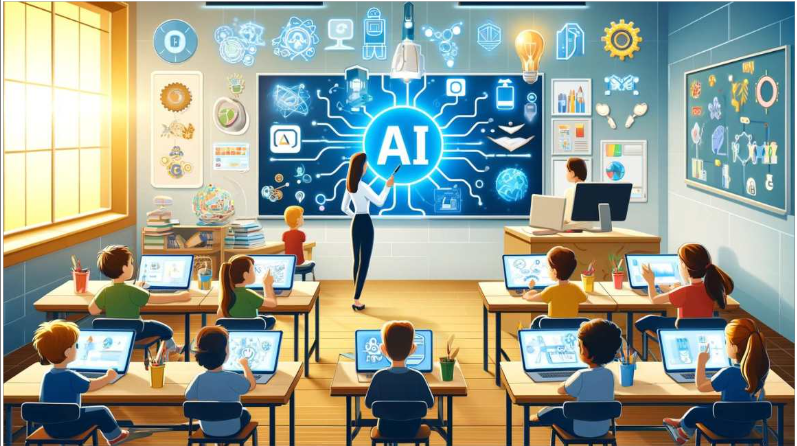
Artificial Intelligence (AI) is rapidly transforming the education sector across the world. From personalized learning experiences to smart classrooms and automated assessments, AI is reshaping the way students learn and educators teach. As digital education becomes increasingly important, AI has emerged as a powerful tool to make education more accessible, inclusive, efficient, and future-ready.
Artificial Intelligence in education refers to the use of intelligent technologies, software, and systems that can simulate human thinking and decision-making to improve teaching and learning processes. AI-powered tools can analyze student behavior, learning patterns, and performance to provide customized educational experiences.
Today, AI is being used in:
Learning Management Systems (LMS)
Virtual classrooms
Adaptive learning platforms
AI chatbots
Automated grading systems
Skill assessment tools
Language translation and accessibility tools
Traditional education systems often follow a “one-size-fits-all” approach. However, every student has different learning abilities, interests, and pace of understanding. AI helps bridge this gap by creating personalized learning pathways.
AI can:
Improve learning outcomes
Enhance student engagement
Reduce administrative burden on teachers
Provide real-time feedback
Support remote and rural education
Make learning more inclusive for differently-abled students
AI systems can track a student’s progress and recommend study material based on strengths and weaknesses. Students can learn at their own pace, improving understanding and retention.
AI tools can generate quizzes, summaries, notes, presentations, and interactive content, making learning more engaging and efficient.
Virtual AI tutors and chatbots provide 24/7 academic assistance to students by answering questions and guiding them through concepts.
AI can evaluate assignments, multiple-choice tests, and even descriptive answers, reducing teachers’ workload and enabling faster feedback.
AI-powered translation and speech-to-text tools help students learn in their preferred language and support students with disabilities.
Educational institutions can use AI to identify students at risk of dropping out and provide timely intervention and support.
AI makes quality education accessible to students in rural and economically weaker regions through digital platforms and mobile-based learning.
Interactive AI tools, gamification, and smart recommendations make learning more interesting and student-friendly.
AI automates attendance, scheduling, grading, and data management, allowing educators to focus more on teaching.
AI-based platforms help students acquire modern skills such as coding, communication, problem-solving, and digital literacy.
AI enables lifelong learning through online certifications, self-paced courses, and virtual mentorship.
Despite its advantages, AI adoption in education also faces certain challenges:
Digital divide and lack of internet access
Limited technological infrastructure
Data privacy and cybersecurity concerns
Lack of teacher training
Dependence on technology
High implementation costs in some regions
Addressing these challenges requires collaboration between governments, educational institutions, technology providers, and social organizations.
The future of education will be increasingly technology-driven, personalized, and skill-oriented. AI is expected to play a major role in:
Virtual and immersive learning
Intelligent classrooms
Career guidance systems
Emotional and behavioral learning analytics
AI-based skill certification
Hybrid learning ecosystems
Educational institutions that adopt AI responsibly will be better equipped to prepare students for the digital economy and future workplaces.
For countries like India, AI has the potential to democratize education by reaching millions of students from underserved communities. AI-powered LMS platforms can provide affordable learning opportunities to low-income students and bridge educational inequalities.
Initiatives like digital classrooms, multilingual learning platforms, and AI-enabled skill training can create a more equitable education system.
Artificial Intelligence is not replacing teachers; rather, it is empowering educators and students with smarter tools and better learning opportunities. When used ethically and inclusively, AI can revolutionize education by making it more personalized, accessible, engaging, and effective.
The integration of AI in education is no longer a future concept — it is a present reality that has the power to transform societies and build a skilled, knowledge-driven generation for tomorrow.


Admin User
0 comment